
Sub-agents is on by default and admins can turn it off or tune it in AI Settings. A sub-agent is not a separate agent from the Agents page: it is the agent you are talking to, running a narrower task in the background.
When the agent delegates
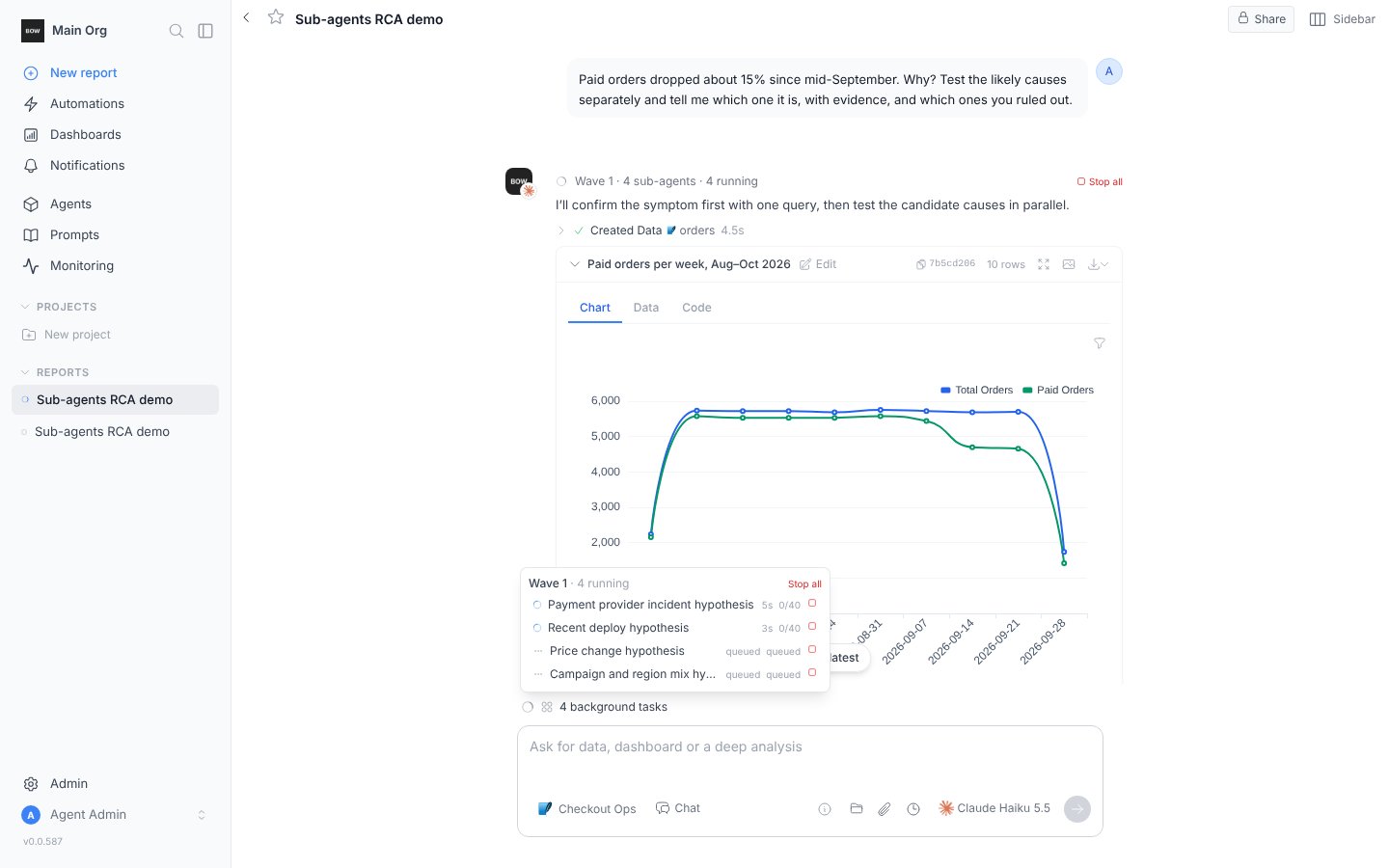
With the default proactive posture, the agent delegates on its own when a request splits into three or more independent sub-questions that each need several steps: one hypothesis per candidate cause in a root cause ask, or the same deep check across many sources. It never delegates a single query or a “how many” question. With the explicit posture, it delegates only when you or an instruction ask for it, for example test these causes in parallel. The agent launches all the sub-agents of one decision together. That batch is a wave; the report shows it as one line above the agent’s message.What you see
While sub-agents run
Each sub-agent is a card in the agent’s message with its title, its status, how many steps it has taken of its limit, and how long it has been running. Open a card to read the goal the agent gave it and watch its tool calls as they happen. Stop on a card ends that sub-agent; Stop all on the wave line ends the wave.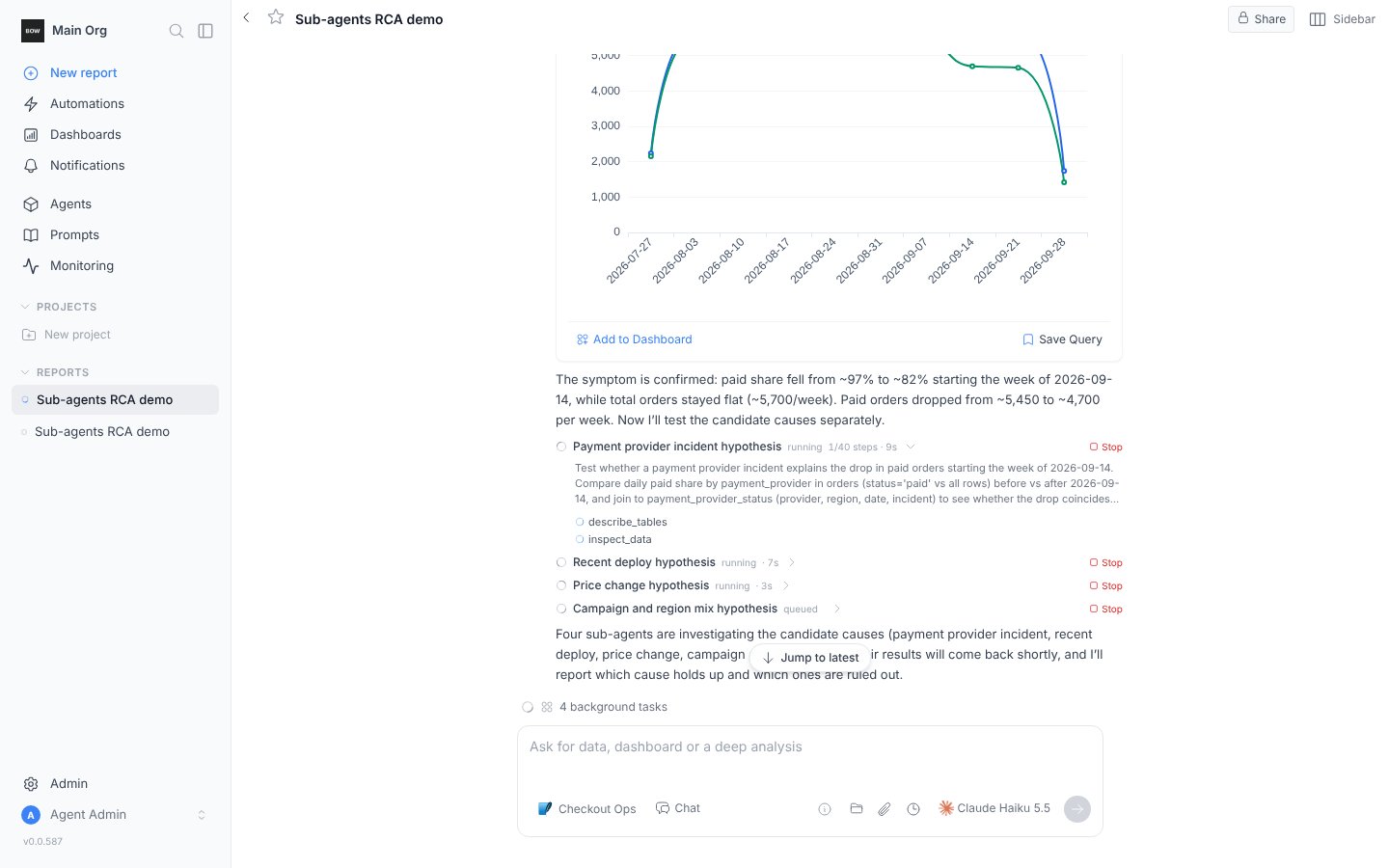
When they finish
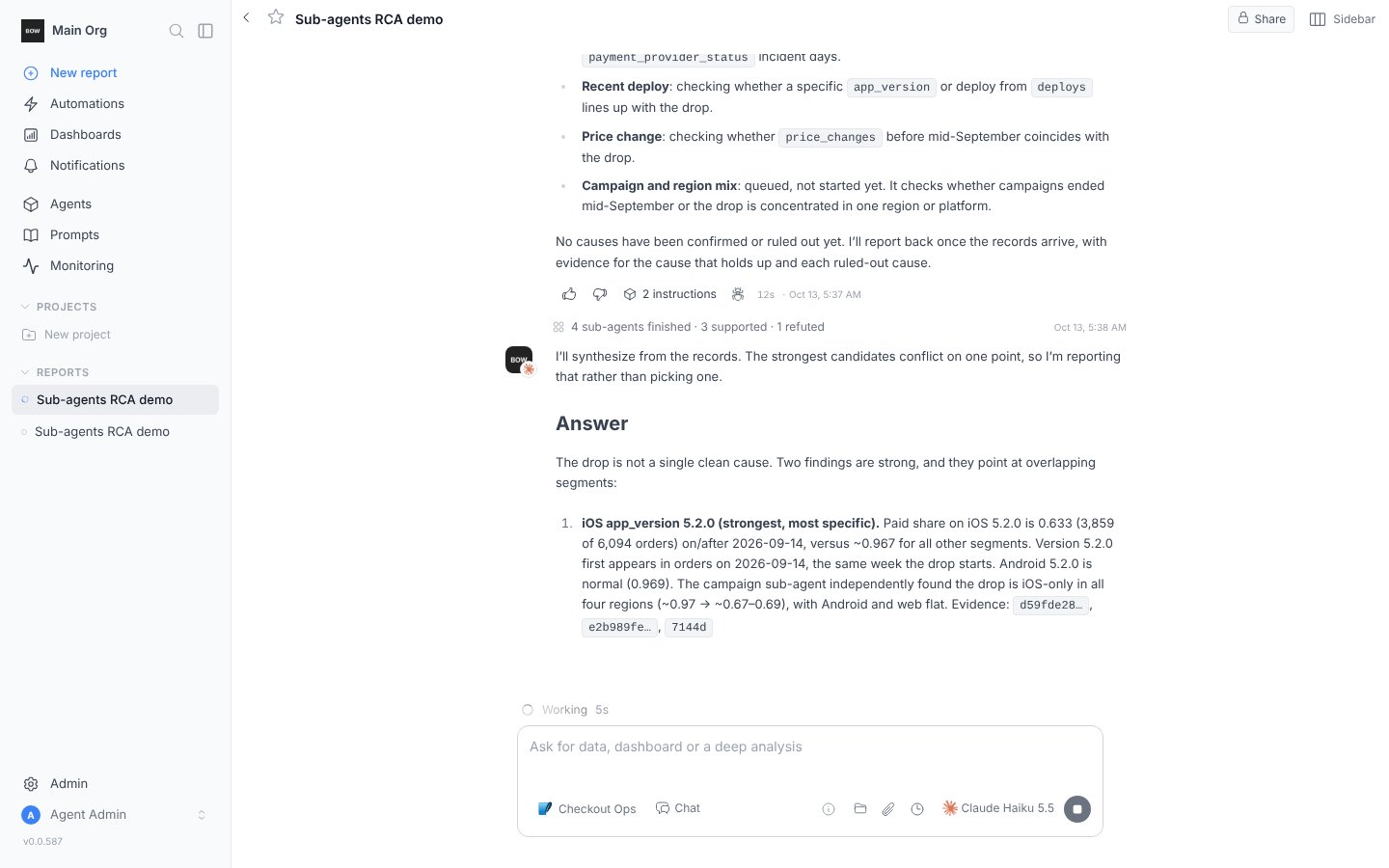
An event line reports the wave: how many sub-agents finished and their outcomes. Right after it, the agent’s reply synthesizes the records: the answer, the numbers behind it, what was ruled out, and what stayed open. If the wave hit its deadline, the line says so and the reply works from the records that exist.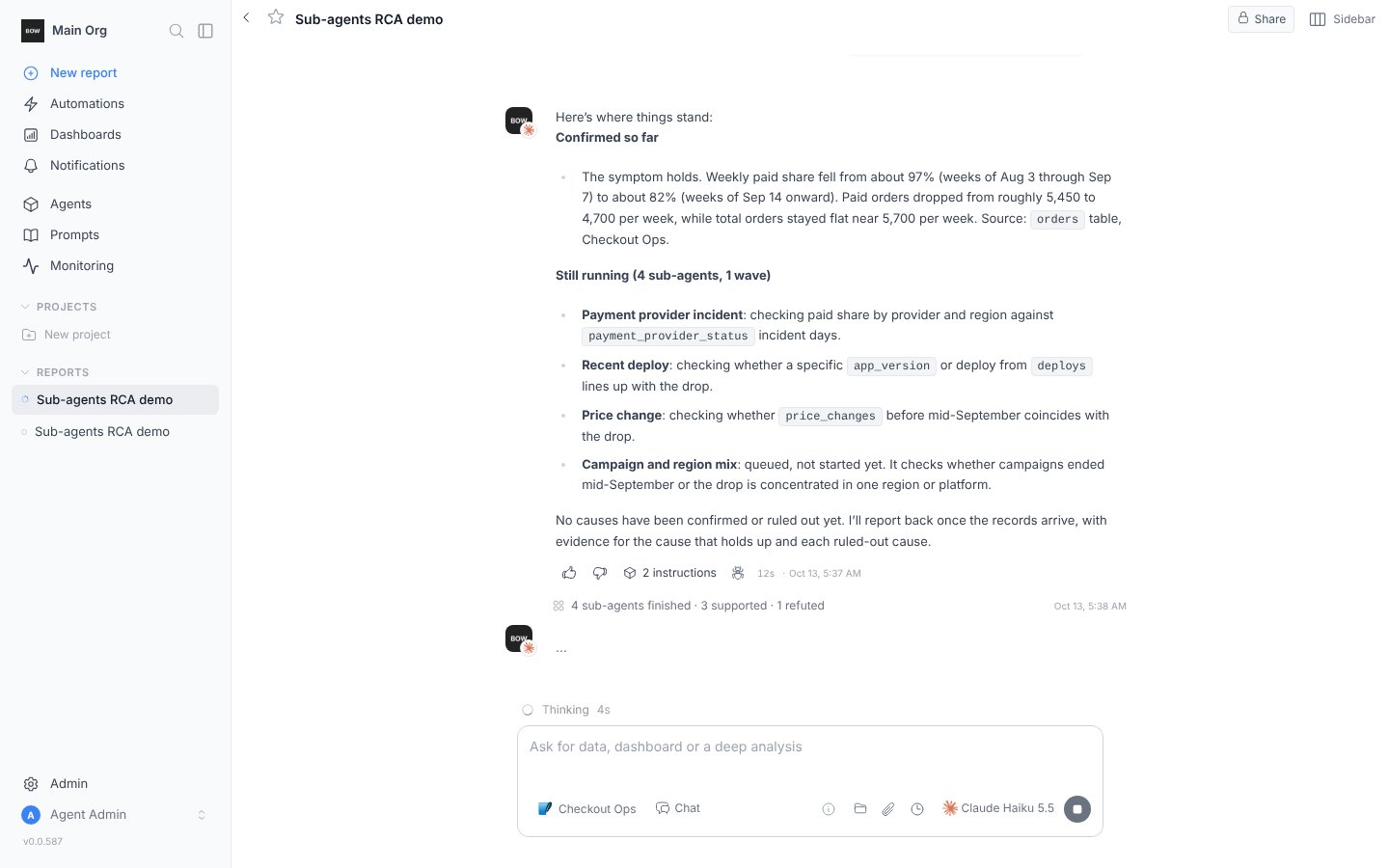
In the Summary tab
The report’s Summary tab lists the sub-agents of the conversation with their outcome, steps and tokens, and tags every query a sub-agent created with the sub-agent it came from.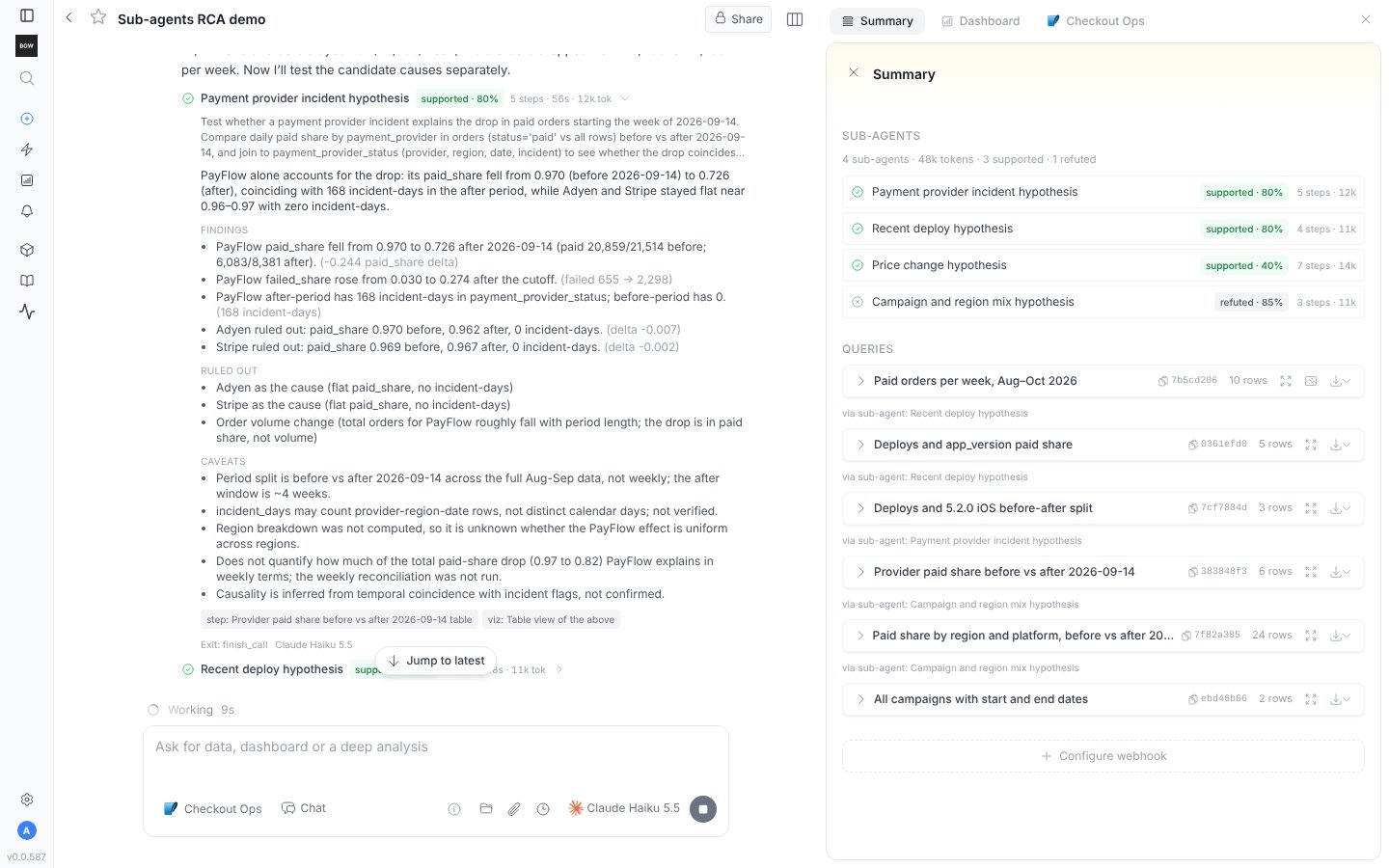
What a sub-agent reports
A sub-agent ends by writing one typed record. It cannot finish any other way; if it runs out of steps or time, the record is written for it and marked partial.
The agent treats a record as the sub-agent’s own report, not as fact: it cites the evidence, carries every ruled-out item and caveat into its answer, and turns an inconclusive or blocked record into a follow-up instead of a guess. Sub-agent ids never appear in the conversation.
What a sub-agent can do
A sub-agent runs with a narrower toolset than the agent. It can describe tables, inspect data, read queries and notes, search instructions and write notes. It cannot ask you a clarifying question, build dashboards or documents, create instructions, or launch sub-agents of its own. By default a sub-agent does not create tracked queries; its evidence comes from inspections. An admin can turn on Sub-agents may create queries so sub-agents create queries the agent can chart and cite. Those queries belong to the report like any other and carry the sub-agent’s name in the Summary tab. Every sub-agent has a step limit and the wave has a wall-clock deadline, both set in AI Settings. The number that run at the same time is capped too; the rest wait inside their wave and show as queued.Related
Root cause analysis with sub-agents
Walk through a planted incident on the Checkout Ops demo.
AI Settings
Turn sub-agents on or off, set the posture, limits and model.